 H FACTOR
 Cannabis SEO: The Complete 2026 Guide
Cannabis SEO explained: why dispensaries and CBD brands need search more than any industry, and the honest playbook that works in 2026.
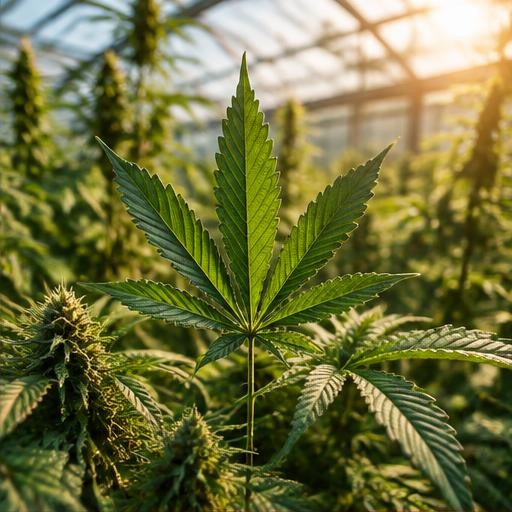
Search engine optimization for cannabis businesses isn't a niche tactic. For most dispensaries, CBD brands, and hemp companies, it's the only scalable marketing channel they have. This guide covers what cannabis SEO actually is, why this industry needs it more than any other, and the playbook that works.
What Is Cannabis SEO?
Cannabis SEO is the practice of making a cannabis-adjacent business visible in search results — Google, Bing, and increasingly the AI assistants (ChatGPT, Gemini, Perplexity) that answer questions directly. It covers the same fundamentals as any SEO program: keyword research, content, technical health, local presence, and authority building. The difference is the context. An industry that can't buy its way to visibility has to earn it, and that changes the strategy from the ground up.
Why Cannabis Businesses Need SEO More Than Anyone
Most industries treat SEO as one channel among many. Cannabis doesn't have that luxury:
- Paid ads are largely off the table. Meta and Google restrict cannabis advertising. The businesses that can least afford to be invisible are the ones locked out of the ad platforms.
- Social reach is throttled. Cannabis content gets shadowbanned, flagged, or buried on mainstream platforms. You can have ten thousand followers and reach a few hundred of them.
- Demand is search-driven. When someone needs a dispensary, a CBD product, or a medical card doctor, they search. "Dispensary near me" is one of the highest-intent queries in local commerce — the person typing it is ready to buy today.
Put together, that means search isn't a nice-to-have for cannabis. It's the front door. If you're not visible when the search happens, you don't exist for that customer.
The Core Playbook
1. Keyword research: find what customers actually type
Everything starts with real queries. Dispensary customers search by location ("dispensary in [city]", "[city] dispensary near me"). CBD buyers search by problem and product ("CBD for sleep", "best CBD gummies"). Patients search by process ("how to get a medical card in [state]"). The job is to map every query worth winning and build content for each one — not guess, not assume, map.
2. Content that answers real questions
Google ranks pages that satisfy search intent. For cannabis, that means educational content written in plain language: guides, comparisons, cost breakdowns, law explainers, product education. One strong article targeting one real question beats ten thin pages every time. And every article should be structured so AI assistants can quote it directly — clear headings, direct answers, FAQ sections.
3. Local SEO: dispensaries live or die locally
For any business with a physical location, the Google Business Profile is the single most valuable free asset in marketing. Claim it, complete every field, add photos, post updates, and collect reviews relentlessly. Most dispensaries competing for "near me" searches are won or lost here before the website even matters.
4. Technical foundations
None of the above works on a broken site. Page speed, mobile usability, clean site structure, and schema markup (especially FAQ and local business schema) are the unglamorous work that lets everything else rank. Audit first, fix second, build third.
5. AI citations: the new front page
A growing share of product and local questions never reach Google at all — they go to ChatGPT, Gemini, or Perplexity. These systems cite sources. Content with clear structure, factual answers, and real authorship gets cited. Content that's vague or purely promotional doesn't. Optimizing for AI citation is now part of the job, not a bonus.
What Cannabis SEO Is Not
It's not paid ads. It's not social media management. It's not a trick, a hack, or an overnight result. Anyone promising guaranteed page-one rankings — in cannabis or any industry — is selling something you shouldn't buy. SEO is earned visibility, and earned means it takes work and time.
How Long Does It Take?
The honest answer: search authority compounds over months, not days. Our operating target is meaningful ranking movement within 90 days — a target we work toward, not a promise we make, because no ethical SEO can guarantee Google's behavior. What you can get immediately is distribution: publishing across an owned network of blogs, communities, and video so the content gets seen while it climbs. Visible this week. Building toward 90 days. Compounding after that.
Wondering what this costs in practice? See How Much Does Cannabis SEO Cost? for a full pricing breakdown.
Frequently Asked Questions
Is cannabis SEO different from regular SEO?
The fundamentals are identical. What's different is the environment: no paid ads to lean on, throttled social reach, and compliance constraints on what you can say. The strategy adapts to those constraints — more owned content, more local focus, more educational depth.
Can a CBD brand rank on Google?
Yes. CBD and hemp content ranks normally on Google as long as it follows standard quality guidelines. The ad restrictions don't apply to organic search. Many CBD brands get the majority of their traffic from SEO for exactly this reason.
Do I need a blog for cannabis SEO?
If you want to rank for anything beyond your brand name, yes. Google ranks pages, not websites — every question your customers ask needs a page that answers it. A dispensary with forty strong articles will outperform a dispensary with a five-page site in almost every market.
What about AI search — does it matter yet?
It matters now and it will matter more every quarter. A meaningful share of "where should I go" and "what should I buy" questions are already going to AI assistants. Content structured for citation — direct answers, clear headings, FAQ sections — is how you show up there.
How do I know if my cannabis SEO is working?
Track three things: keyword rankings for your target terms (monthly), organic traffic growth (quarterly trend, not daily noise), and conversions that came from search (calls, form fills, direction requests). Rankings without traffic are vanity; traffic without conversions is a hobby.